
Thu 27 Nov, 11 AM
Amazon Long-Term Storage Fees
If you sell on Amazon using FBA, you’re already familiar with fees for fulfillment, storage, and shipping. But there’s another cost that can quietly erode your profitability: long-term storage fees (LTSF) and charges for slow-moving or stagnant inventory. For many sellers, these fees are one of the most overlooked areas affecting cash flow. Understanding how LTSF works, when it’s triggered, and how to proactively manage inventory can save thousands of dollars a year and protect your margins.
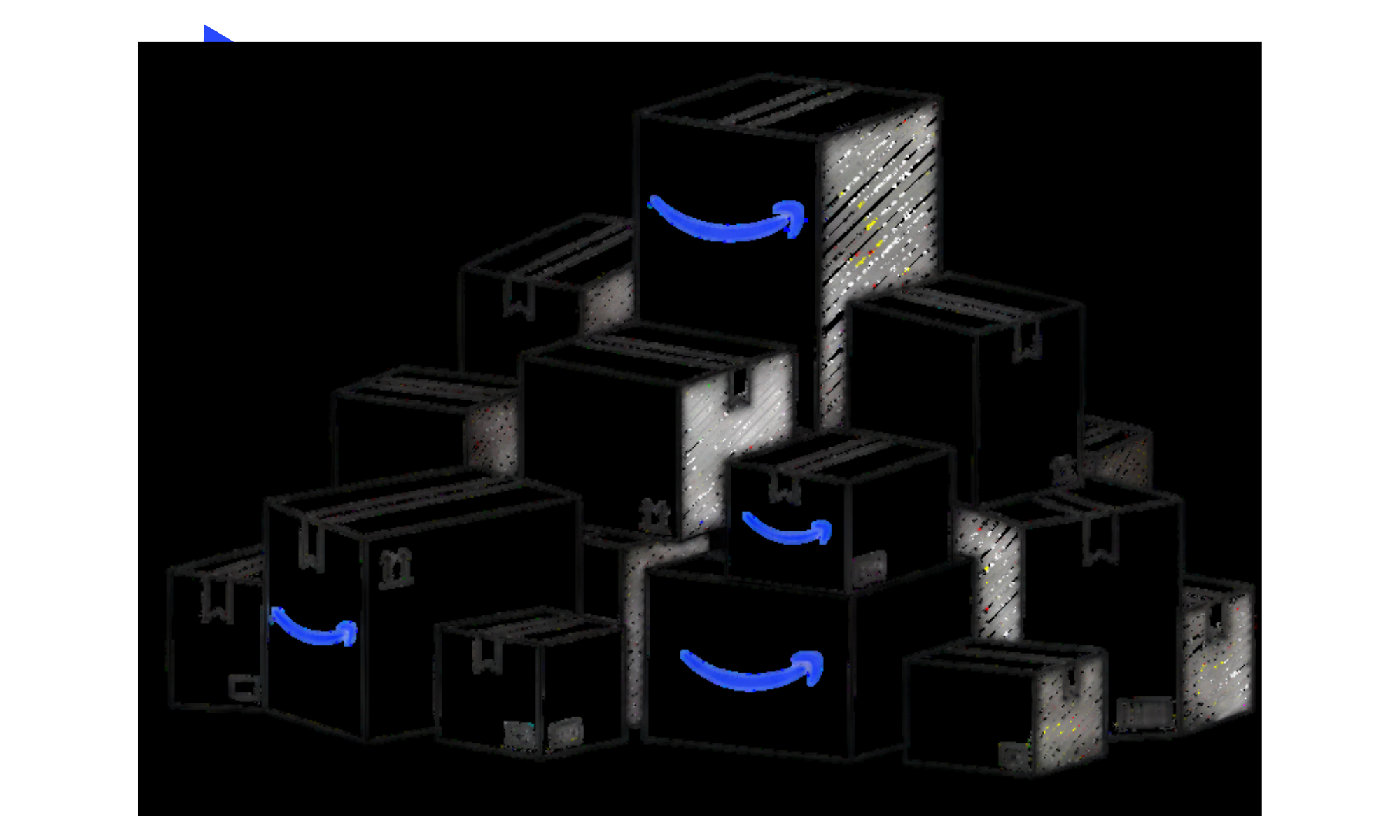
What Are Amazon Long-Term Storage Fees? Amazon introduced LTSF to incentivize sellers to keep products moving rather than allowing stock to sit in fulfillment centers indefinitely. These fees reward efficient inventory management and penalize stagnant items.
Key points:
- Fees apply only to FBA sellers; FBM sellers are not charged LTSF.
- Units are subject to LTSF if stored for 181+ days and again if stored for 361+ days.
- Fees vary depending on the size tier of the product, standard-size units are charged differently than oversized items.
- Holding inventory too long can turn profitable items into financial liabilities. Even a single SKU that sits unsold for months can accumulate large fees.
How Amazon Calculates Long-Term Storage Fees, Amazon’s LTSF is calculated monthly, based on:
- Storage duration – 181–365 days or 365+ days.
- Item size – small/standard versus oversized.
- Unit volume – fees are applied per unit or per cubic foot, depending on size.
IMPORTANT: Rates are updated frequently by Amazon and vary by marketplace. Always check the latest rates in your Seller Central account.
Units with low sales velocity or unpredictable demand are the most vulnerable. High-value, low-volume products may see fees that eat a substantial portion of the profit margin.
Why Long-Term Storage Fees Matter – Long-Term Storage Fees (LTSF) are more than just another expense – they have real operational consequences for your Amazon business. Because these fees are applied per unit, slow-moving or low-margin items can quickly become unprofitable, turning inventory that initially seemed profitable into a financial drain. Holding stagnant products also ties up working capital, preventing you from investing in faster-moving SKUs, paying suppliers, or seizing growth opportunities. Additionally, when items linger in FBA warehouses, inventory planning becomes more complex. Forecasting demand, scheduling replenishments, and maintaining balanced stock levels are all made more challenging, especially during seasonal peaks or unexpected sales fluctuations.
These fees can also drive sellers to order larger batches than necessary in an effort to avoid stockouts, which can ironically increase storage risk and further inflate LTSF. Essentially, Amazon uses these charges to encourage sellers to maintain efficient, high-turnover inventory. Successfully navigating this landscape requires careful planning, accurate sales forecasting, and proactive replenishment strategies. Sellers who treat LTSF as a signal rather than just a cost can use it as an opportunity to optimize inventory management, free up capital, and protect overall profitability.
How to Avoid or Reduce Long-Term Storage Fees
- Monitor Inventory Age Closely – Use Amazon’s Inventory Age Report to track units approaching 180 days. Regular monitoring allows you to: Identify slow-moving SKUs early; Plan sales promotions or repricing campaigns; Decide when to create removal or liquidation orders; Monitoring inventory age weekly (or more frequently for high-volume SKUs) is a best practice.
- Reprice or Promote Slow-Moving Stock – Slower-moving items may benefit from strategic price adjustments or promotions: Reduce price to stimulate sales velocity; Offer bundling with faster-selling SKUs; Create targeted campaigns for underperforming inventory.
Be cautious: aggressive discounts can affect profit margins, so always calculate whether the increased sales will offset storage fees. - Schedule Removal or Liquidation Orders – If stock isn’t moving, consider removing it from FBA:
Removal orders: Ship inventory back to your warehouse or a 3PL for future use or local sales.Liquidation: Sell to Amazon’s FBA Liquidations program or third-party liquidation services. These strategies prevent units from accumulating additional LTSF while freeing warehouse space.
- Improve Inventory Forecasting – Plan shipments and inventory levels based on historical sales data: Smaller, more frequent shipments reduce the risk of stock aging; Use seasonal sales trends to anticipate spikes; Maintain a safety buffer for high-demand SKUs, but avoid overstocking low-demand products; Accurate forecasting is a proactive approach that minimizes storage fees and capital lockup.
- Use FBM or Hybrid Fulfillment Models – Items with slow turnover may be better suited for Fulfilled by Merchant (FBM): Avoids long-term storage fees entirely; Allows more control over inventory location and movement; A 3PL can handle FBM orders efficiently, maintaining quick delivery for customers; A hybrid strategy – FBA for fast movers, FBM for slow movers – often optimizes cost and service simultaneously.
Recent Updates
- Amazon now monitors daily inventory snapshots for some marketplaces, giving sellers more accurate visibility of aging stock.
- Seasonal inventory, especially holiday products, must be managed carefully; units left unsold post-season are flagged immediately for LTSF.
- Fee calculation can vary by marketplace; verify unit-level vs. parent-ASIN level aggregation in your Seller Central reports.
- Being proactive in 2026 means checking Amazon updates regularly and adapting strategies quickly.
Long-term storage fees are more than just another Amazon charge; they reflect the cost of holding inventory that isn’t selling. Smart sellers treat LTSF as a signal to optimize inventory planning, pricing, and fulfillment strategies. With proper monitoring, accurate forecasting, and proactive action, you can minimize fees, free up working capital, and keep your FBA business profitable.
Don’t let stagnant inventory erode your profits. Partner with us to build a long-term inventory strategy that keeps your products moving and your margins protected.
Share this post:


Explore Our Solutions
Discover InSync Fulfillment’s smart logistics solutions, designed to help international brands scale in the U.S. with speed, flexibility, and full control.
Set yourself up to compete in the U.S. market
with scalable, flexible, and service-oriented fulfillment solutions.
The difference between selling and scaling often comes down to your fulfillment partner. InSync gives you the infrastructure, visibility, and support to fulfill with confidence – across Amazon, DTC, wholesale or just everywhere.